
The CX Frontline AI & Automation
The multi-agent handoff is where your CX strategy dies
AI agent orchestration fails when context is lost between specialized bots. Learn how to manage multi-agent CX without creating a broken customer journey.
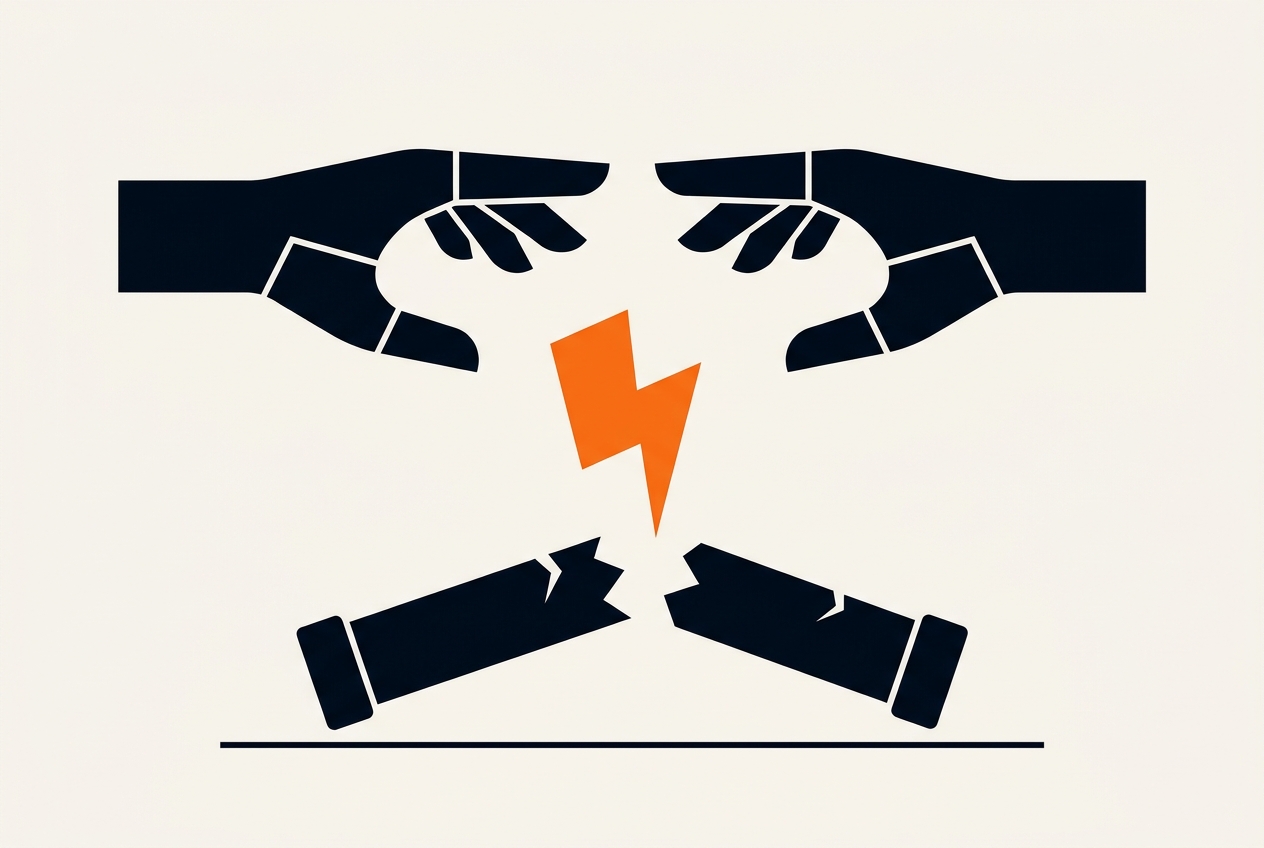
AI agent orchestration is the technical process of managing multiple specialized AI models to complete complex customer journeys. In 2026, successful orchestration requires a centralized context layer that prevents 'context amnesia' when a customer moves from a billing agent to a technical support agent. Without a unified state management system, multi-agent architectures create the same silos that plagued legacy contact centers.
Key takeaways
- Context is the currency of orchestration. If the 'Billing Bot' cannot pass the full transcript and intent to the 'Technical Bot,' the customer experience resets to zero.
- Domain-specific AI is the 2026 standard. Gartner predicts a shift toward specialized models rather than one-size-fits-all LLMs to ensure accuracy and data protection.
- Orchestration requires a supervisor layer. You need a non-participatory AI layer to monitor handoffs, flag hallucinations, and ensure compliance across the entire session.
- Human escalation must be data-rich. The transition from an AI agent to a human representative on platforms like Genesys or Five9 must include a summarized 'state' of the interaction.
Why does multi-agent orchestration fail in CX?
Multi-agent orchestration fails because most organizations treat AI agents as independent chatbots rather than integrated components of a single service engine. When a customer interacts with a specialized agent built on OpenAI for initial triage and is then moved to a Salesforce agent for account management, the 'handoff' often loses the nuance of the conversation.
This lack of continuity leads to Why autonomous support agents fail behind closed doors. If the second agent asks a question the customer already answered, the efficiency gains of AI are immediately erased by customer frustration. To solve this, leaders are moving toward a 'Unified Context Store' where the conversation history exists independently of the specific model being used at that moment.
How do you build a resilient orchestration layer?
Building a resilient orchestration layer involves separating the 'Brain' (the orchestrator) from the 'Hands' (the specialized agents). The orchestrator is responsible for intent recognition and routing, while the specialized agents handle task execution.
According to Gartner's Customer Service & Support research, the focus for 2026 is on domain-specific AI. This means using a model fine-tuned for your specific industry regulations or product technicalities. For example, a travel company might use Google Cloud Vertex AI to manage flight rebooking logic while using Anthropic for empathetic customer communications. The orchestrator must decide which model is best suited for the specific turn in the conversation.
Is your multi-agent architecture creating compliance risks?
Every handoff between agents is a potential point of data leakage or compliance failure. When data moves from one specialized bot to another, or from an AI to a human agent, the risk of misinterpretation increases. This is particularly dangerous in regulated industries like finance or healthcare.
To mitigate this, sophisticated teams are deploying conversation intelligence layers. A tool like Hear.ai can provide automated QA and compliance monitoring across 100% of these multi-agent interactions. By analyzing the handoffs in real-time, these systems flag when an AI agent makes a promise the company cannot keep or fails to provide a required legal disclosure. This shift is turning the traditional quality assurance role into a high-level oversight function, as explored in Your QA team is now a machine-learning audit department.
What is the role of the 'Supervisor' agent?
In a multi-agent ecosystem, you cannot rely on the agents to grade their own homework. A 'Supervisor' agent is a separate, low-latency model that watches the interaction between the customer and the functional agents. Its only job is to detect friction.
If the Supervisor detects that the customer is repeating themselves or that the 'Billing Bot' is hallucinating a policy, it can force an escalation to a human agent on a platform like Talkdesk or NICE. This 'outside-in' monitoring is what separates a experimental AI project from a production-ready CX strategy. IDC's Future of Customer Experience research highlights that tech spend is increasingly shifting toward these governance and observability tools rather than just the core generative models.
How to manage the transition to human agents?
Orchestration does not stop when a human enters the chat. In fact, the human-to-AI handoff is the most critical part of the journey. In 2026, a 'blind transfer' is unacceptable. The orchestration layer should provide the human agent with:
- A bulleted summary of what has been attempted.
- The current sentiment of the customer.
- The specific data points already collected (account numbers, error codes).
Platforms like Zendesk and Intercom are increasingly building these 'Agent Copilot' features to ingest the data provided by the orchestration layer. This ensures that when the human takes over, they are acting as an expert closer rather than a data entry clerk.
FAQ
What is the difference between routing and orchestration? Routing simply sends a customer to a destination based on a keyword or intent. Orchestration manages the ongoing 'state' of the conversation, allowing multiple agents to collaborate on a single session while maintaining context and memory.
Do I need a different vendor for every specialized agent? No. You can run multiple specialized agents within a single ecosystem like Microsoft Azure AI Studio or AWS. However, the best-of-breed approach often involves using different models (e.g., Llama 3 for speed, Claude 3 for complex reasoning) depending on the task.
How do I measure the success of an orchestrator? Look at 'Context Retention Rate' and 'Handoff Friction.' If a customer has to repeat a piece of information after a transfer, the orchestrator has failed. Successful orchestration should result in a lower Average Handle Time (AHT) for human agents because the AI has done the heavy lifting of data gathering.
Is multi-agent orchestration more expensive? While it involves more API calls, it is often more cost-effective than using one massive, expensive model for simple tasks. By using smaller, specialized models for basic queries and reserving high-reasoning models for complex problems, you optimize your compute spend.
Explore our latest analysis on How to build a multi-agent CX architecture that actually scales.