
The CX Frontline AI & Automation
Why your AI agents need a boss: The guide to oversight
AI agents are handling more customer interactions than ever, but without strict oversight, they create massive brand risk. Learn how to build a robust AI governance framework.
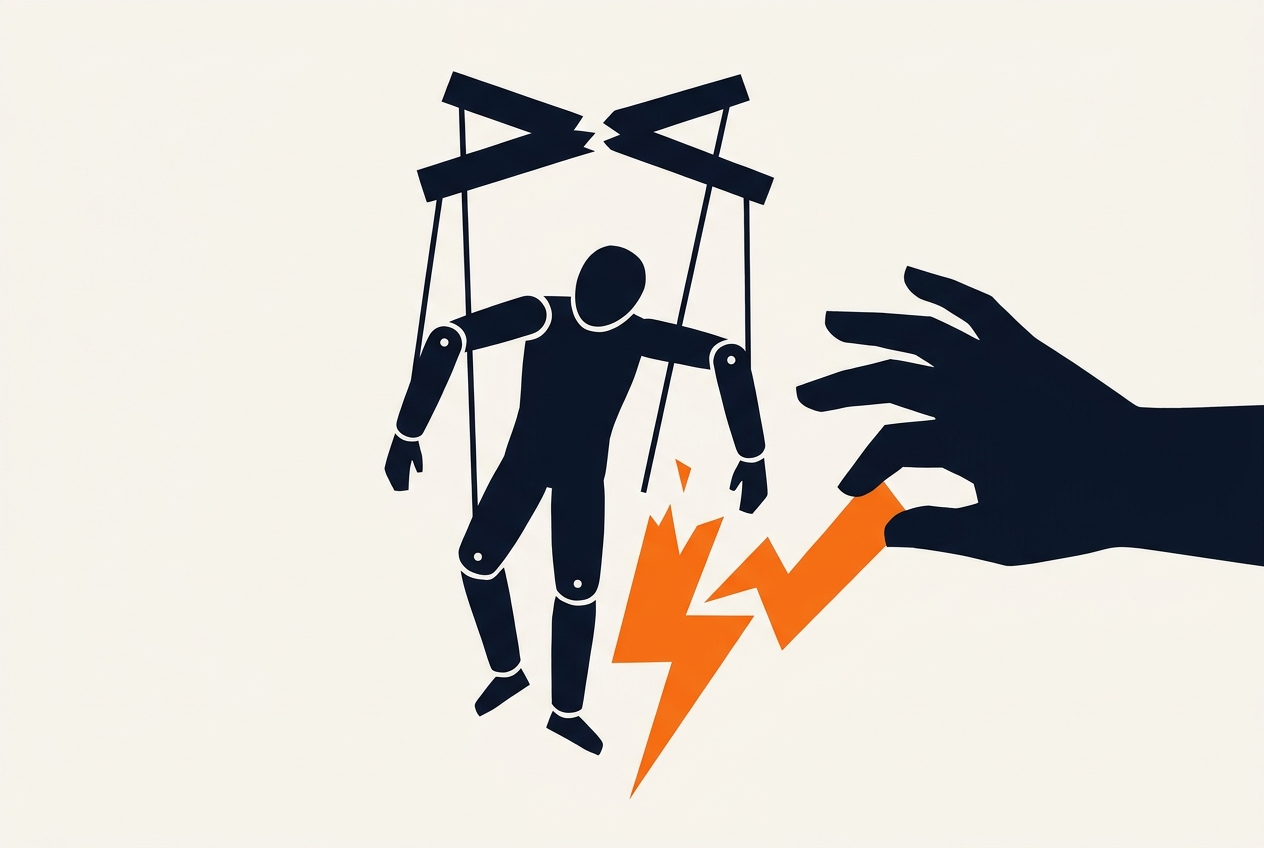
AI oversight is the systematic management of automated customer interactions to ensure they align with brand standards, legal requirements, and customer needs. It replaces manual sampling with automated auditing to catch errors before they scale. Effective oversight requires a combination of real-time guardrails and post-interaction analysis to prevent bot hallucinations or policy violations.
Key takeaways
- Sampling is dead: You cannot manage AI by looking at 2% of calls; you must audit 100% of automated interactions.
- Guardrails are the first line of defense: Use real-time filters to block toxic or inaccurate outputs before the customer sees them.
- Compliance is the biggest risk: AI agents can inadvertently promise refunds or disclose data without strict, programmatic monitoring.
- Human-in-the-loop is shifting: CX leaders are moving from managing people to managing the systems that manage the bots.
The illusion of "Set and Forget"
Many CX leaders treat AI deployment as a one-time setup. They configure a bot, test a few dozen prompts, and assume the system will stay within its lane. This is a mistake. Large Language Models (LLMs) from providers like OpenAI or Google Cloud are probabilistic, not deterministic. This means the same input can produce different outputs over time, a phenomenon known as model drift.
Without an oversight layer, you are flying blind. If a bot starts giving incorrect technical advice or adopts an aggressive tone, you might not notice until your CSAT scores crater or a social media firestorm erupts. The goal of oversight is to turn the "black box" of AI into a transparent, measurable operation.
The three pillars of AI governance
To manage AI agents effectively, you need a framework that covers three distinct areas: prevention, detection, and correction.
1. Real-time guardrails
Guardrails are the software filters that sit between the AI and the customer. They analyze the bot's proposed response for specific triggers—such as mentions of competitors, inappropriate language, or promises of discounts that exceed policy. If the guardrail triggers, the response is blocked or rewritten. This adds a few milliseconds of latency, but the trade-off is essential for brand safety.
2. Automated auditing
Manual QA cannot scale with AI. If your bot handles 50,000 chats a day, a human team can only scratch the surface. Enterprises are now using a conversation-intelligence layer like Hear.ai to analyze every single interaction. These tools flag compliance risks and sentiment shifts across the entire volume, allowing QA teams to focus only on the high-risk exceptions. This shift from sampling to total coverage is a core recommendation in Gartner's Customer Service & Support research, which emphasizes the need for data protection and domain-specific AI monitoring.
3. Feedback loops
Oversight is useless if it doesn't improve the system. When an error is detected, the transcript should be fed back into the training pipeline. This might involve updating the system prompt in Salesforce Service Cloud or refining the knowledge base that the bot uses to generate answers. This iterative process is what separates a static bot from a high-performing AI agent.
Why compliance is the new CX bottleneck
In regulated industries like finance or healthcare, the risks of unmanaged AI are existential. An AI agent that misquotes an interest rate or fails to read a mandatory disclosure can lead to heavy fines. Traditional CCaaS platforms like Five9 or Genesys provide the routing and basic automation, but they often require a secondary auditing layer to ensure compliance at scale.
Forrester's CX Index consistently shows that trust is a primary driver of customer loyalty. If a customer realizes they are talking to a bot that is making up rules on the fly, that trust evaporates. Automated oversight ensures that the bot follows the same "script" and compliance logic as your best human agent, every single time.
The technology stack for AI oversight
Building an oversight stack requires more than just the LLM itself. You need an orchestration layer and an observation layer.
- The Orchestration Layer: This is where the AI lives. Platforms like Microsoft Azure AI or AWS Bedrock allow you to deploy models, but they don't inherently tell you if the bot is being "nice" or "helpful."
- The Observation Layer: This is where you measure performance. You need tools that can perform semantic analysis to see if the bot's answer actually solved the customer's problem. This is where conversation intelligence tools come in, providing the "eyes" for the operation.
For more on how to structure these teams, see our guide on how to audit AI agents without doubling QA headcount or read about the hidden cost of AI hallucinations.
Moving from QA to AI Governance
The role of the QA manager is changing. In the past, they listened to calls and filled out scorecards. In the future, they will be "AI Orchestrators." Their job will be to tune the guardrails, review the automated audit reports, and adjust the bot's persona. This requires a shift in mindset: you are no longer coaching a person; you are debugging a system.
FAQ
How do I know if my AI agent is hallucinating? You must implement a 'grounding' check where the AI's response is compared against your official knowledge base. If the response contains facts not found in the source material, it is flagged as a hallucination.
Can I use AI to audit other AI? Yes, this is a standard practice. A separate, more constrained AI model is often used to review the transcripts of the primary customer-facing bot to look for specific errors or policy violations.
Does 100% monitoring slow down the system? Post-interaction auditing does not affect the customer experience at all. Real-time guardrails do add a small amount of latency (usually under 200ms), which is a necessary trade-off for ensuring accuracy and compliance.
What is the first step in building an oversight framework? Start by defining your 'hard boundaries'—the things a bot should never say or do. Once these are codified, you can implement guardrails and automated auditing to enforce them.
Oversight is not a hurdle to AI adoption; it is the only way to make AI safe enough for your customers to use.